Earthquakes in Colorado

0 earthquakes in the last 24 hours• Latest significant: M3.1

Earthquake Map

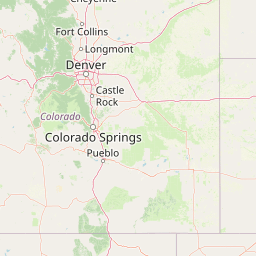
Map showing earthquake epicenter at 39.55°, -105.78°

Recent Earthquakes (Last 30 Days)

Dataset at a glance — Colorado

Over the past 30 days, Colorado has recorded 4 earthquakes of magnitude 2.5 or greater in our tracker. The remaining 4 fell in the M2.5–M3.9 band. By depth: 4 shallow (<70 km). 2 events produced at least one felt report, totalling 15 citizen submissions to the USGS Did You Feel It? system. Focal depths ranged from 3.2 km to 9.8 km. All 4 solutions have been reviewed by a USGS seismologist.

Leading the list is a magnitude 3.1 event near 13 km SSE of Stonewall Gap, Colorado at 3.2 km depth. The second-ranked event, at magnitude 2.9 near 5 km SSW of Walsenburg, Colorado, trails by 0.2 magnitude units — a narrow gap, indicating two comparably energetic events in the current window. Rounding out the top three is a magnitude 2.8 earthquake near 6 km NNW of Redstone, Colorado.

Each row in the table below includes a narrative summary of the event, ordered by time. Use the column headers to sort or filter by magnitude.

Showing 4 of 4
Time Mag Location Depth Felt MMIAlertStatusDetails
3 days ago
2026-06-06 04:42:06 UTC
2.8ml
6 km NNW of Redstone, Colorado
39.236°, -107.255°
9.8 km5--✓ ReviewedUSGS →
Seismographs logged a magnitude 2.8 earthquake 6 km NNW of Redstone, Colorado with origin time 04:42 UTC on June 6, 2026. At 9.8 km, this is the deepest earthquake in the current dataset — firmly in the shallow crustal category. A small number of nearby observers (5) submitted felt reports to the USGS. Coordinates: 39.236°, -107.255°. The solution has been reviewed by a USGS seismologist and is considered finalized. See the M2.8 event page for the full report, ShakeMap, and citizen-reported intensity data.
2026-05-18
2026-05-18 12:29:54 UTC
2.9ml
5 km SSW of Walsenburg, Colorado
37.581°, -104.805°
5.5 km10--✓ ReviewedUSGS →
A magnitude 2.9 earthquake was recorded 5 km SSW of Walsenburg, Colorado on May 18, 2026 at 12:29 UTC. Of every earthquake currently listed for Colorado, this one generated the most felt reports from the public. Nearby residents submitted 10 felt reports to the USGS DYFI platform. At a depth of 5.5 km, the event was shallow crustal. Geolocation places the event at 37.581°N, -104.805°E. The solution has been reviewed by a USGS seismologist and is considered finalized. See the M2.9 event page for the full report, ShakeMap, and citizen-reported intensity data.
2026-05-17
2026-05-17 01:04:21 UTC
3.1ml
13 km SSE of Stonewall Gap, Colorado
37.037°, -104.978°
3.2 km---✓ ReviewedUSGS →
On May 17, 2026 at 01:04 UTC, a magnitude 3.1 earthquake struck 13 km SSE of Stonewall Gap, Colorado. It is the largest earthquake currently listed for Colorado over the past 30 days. At just 3.2 km, it was the shallowest earthquake in the current dataset — a shallow crustal event. The epicenter is at 37.037°, -104.978°. The solution has been reviewed by a USGS seismologist and is considered finalized. See the M3.1 event page for the full report, ShakeMap, and citizen-reported intensity data.
2026-05-16
2026-05-16 11:41:32 UTC
2.6ml
15 km SSW of Sawpit, Colorado
37.875°, -108.093°
9.0 km---✓ ReviewedUSGS →
On May 16, 2026, Colorado registered a magnitude 2.6 earthquake 15 km SSW of Sawpit, Colorado at 11:41 UTC. This was a shallow crustal earthquake, focused at 9.0 km depth. The epicenter is at 37.875°, -108.093°. The solution has been reviewed by a USGS seismologist and is considered finalized. See the M2.6 event page for the full report, ShakeMap, and citizen-reported intensity data.
Legend:
Mag: Magnitude ({magType} = ml, mb, mw, etc.)
Felt: Number of DYFI felt reports
MMI: Modified Mercalli Intensity (I-X+)
Alert: PAGER alert level
Depth: Shallow (<70km), Intermediate, Deep (>300km)
Status: Auto = preliminary, Reviewed = verified by seismologist
Click any row to see additional technical details.

Earthquake Statistics

Last 24 Hours0
Last 30 Days4
2026 (M2.5+)17

Largest (30 Days)
M3.1

13 km SSE of Stonewall Gap, Colorado

2026-05-17

Largest in 2026
M4.1

18 km SSW of Weston, Colorado

2026-05-07

Seismic Risk Level
Low

Data from USGS Earthquake Hazards Program. Updated every 5 minutes.

About Colorado

Colorado has relatively low natural seismicity, though some areas have experienced increased earthquake activity related to fluid injection from oil and gas operations.

Colorado Earthquakes 2026

In 2026, Colorado has recorded 17 earthquakes of magnitude 2.5 or greater so far. The largest earthquake in Colorado in 2026 was a magnitude 4.1 event near Weston, Colorado. As of today, seismic monitoring continues with 0 earthquakes detected in the past 24 hours and 4 in the last 30 days.

Seismic Activity in Colorado

Colorado has relatively low natural seismicity, though some areas have experienced increased earthquake activity related to fluid injection from oil and gas operations.

Colorado has a Low seismic risk level based on historical earthquake data and proximity to active fault lines.

Over the past 30 days, there have been 4 recorded earthquakes in this region. The largest recent earthquake was a magnitude 3.1 event near 13 km SSE of Stonewall Gap, Colorado.

Frequently Asked Questions

How many earthquakes occur in Colorado?

In the past 30 days, 4 earthquakes have been recorded in the Colorado region. The number varies based on seismic activity in the area.

What was the biggest recent earthquake in Colorado?

The largest recent earthquake in the Colorado area was a magnitude 3.1 event that occurred 13 km SSE of Stonewall Gap, Colorado.

Is Colorado at risk for earthquakes?

Colorado has a low seismic risk level. Colorado has relatively low natural seismicity, though some areas have experienced increased earthquake activity related to fluid injection from oil and gas operations.

How can I prepare for earthquakes in Colorado?

Residents should secure heavy furniture, create an emergency kit with supplies for 72 hours, develop a family communication plan, and practice "Drop, Cover, and Hold On" during earthquake drills. Visit our preparedness section for detailed guides.